How often does a private tennis court need resurfacing?
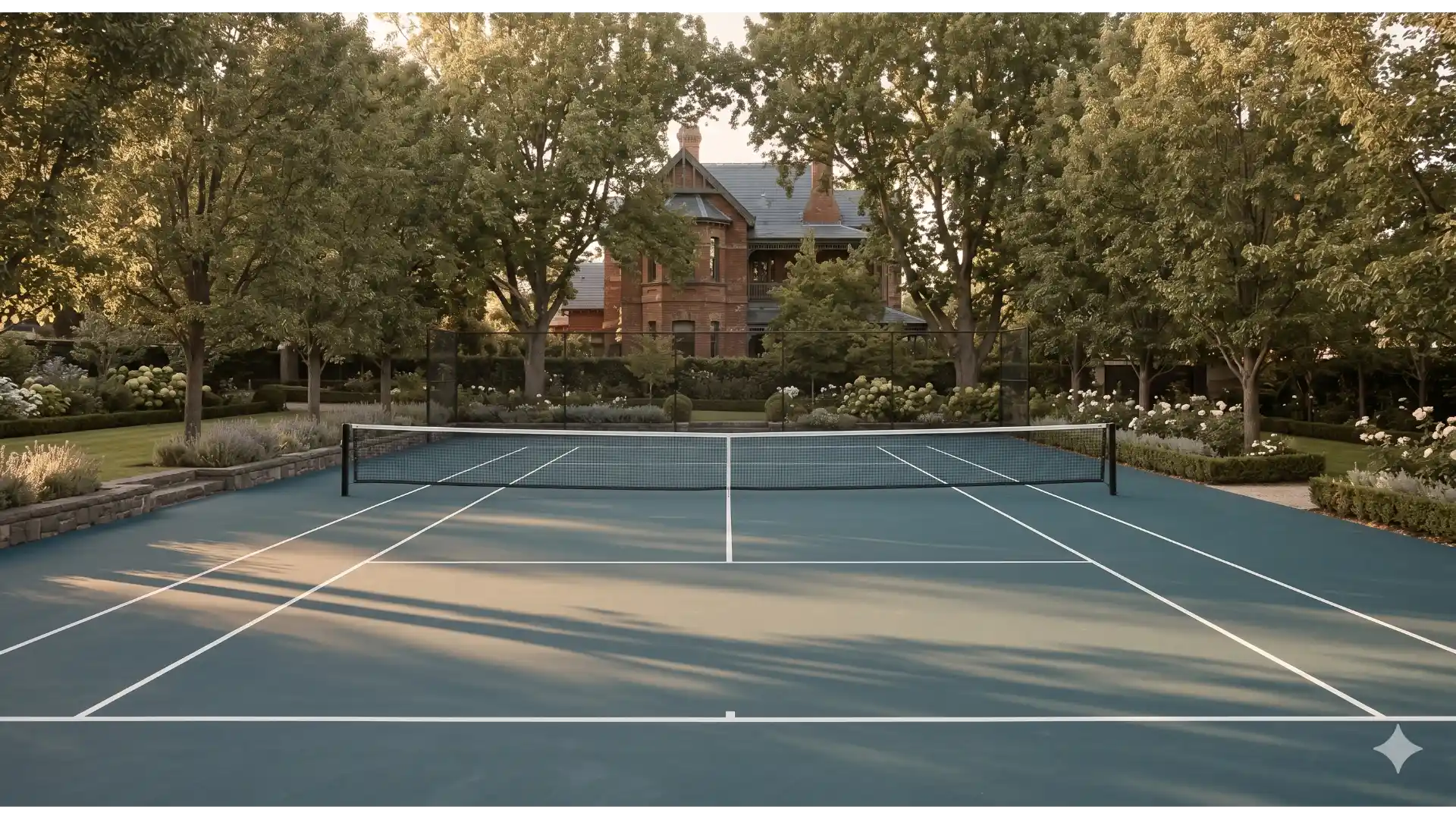
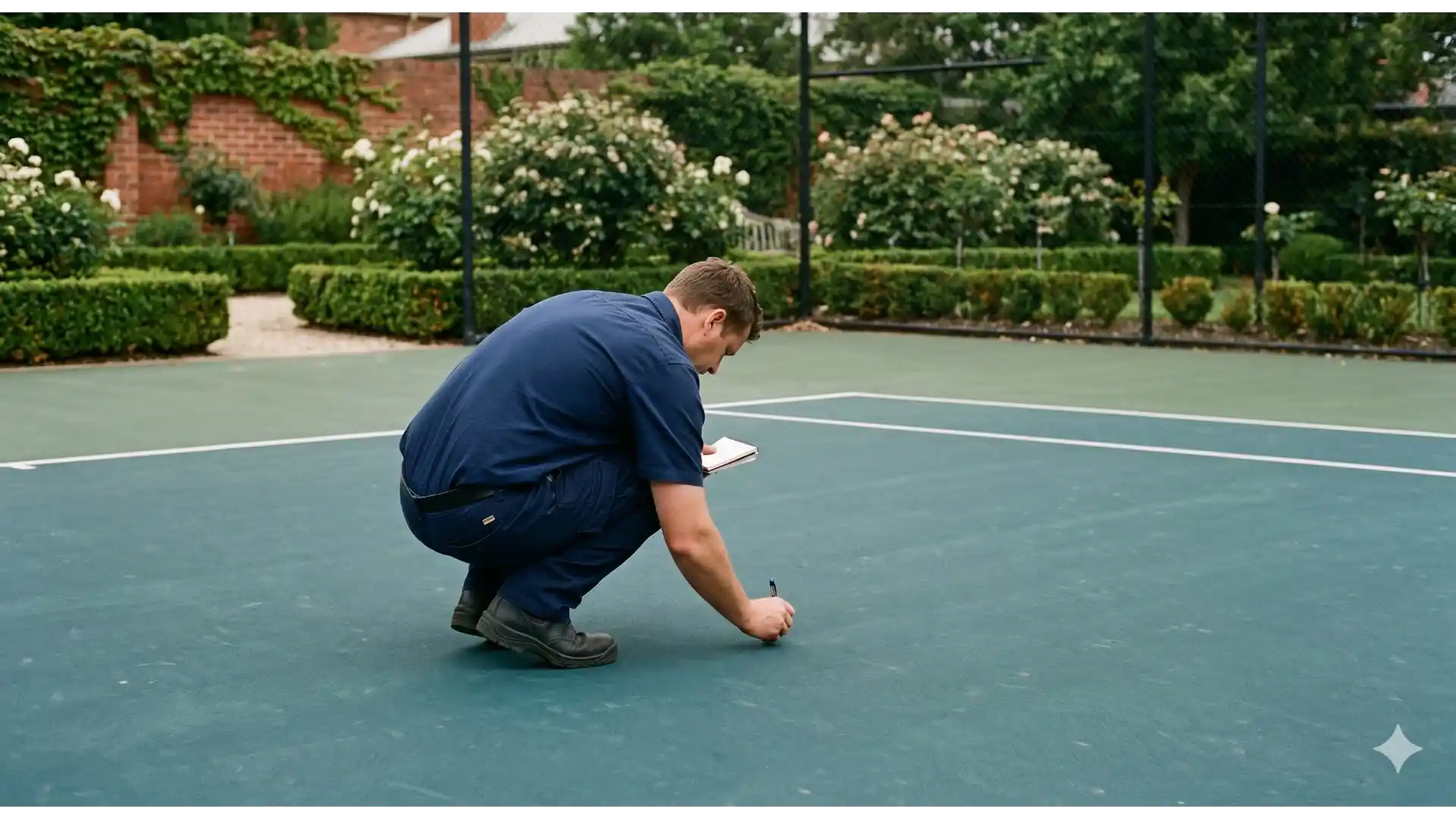
For acrylic hard courts, resurfacing is typically recommended every 4 to 8 years depending on sun exposure, use frequency, and base movement. Synthetic grass courts have a longer cycle, generally 12 to 20 years before replacement is needed, though annual maintenance extends both significantly. En Tout Cas red porous courts rarely need full resurfacing but benefit from regular grooming and occasional rejuvenation. The condition of your base is usually the deciding factor. We assess this during every site visit.
What is an En Tout Cas court, and what are my options for converting it?
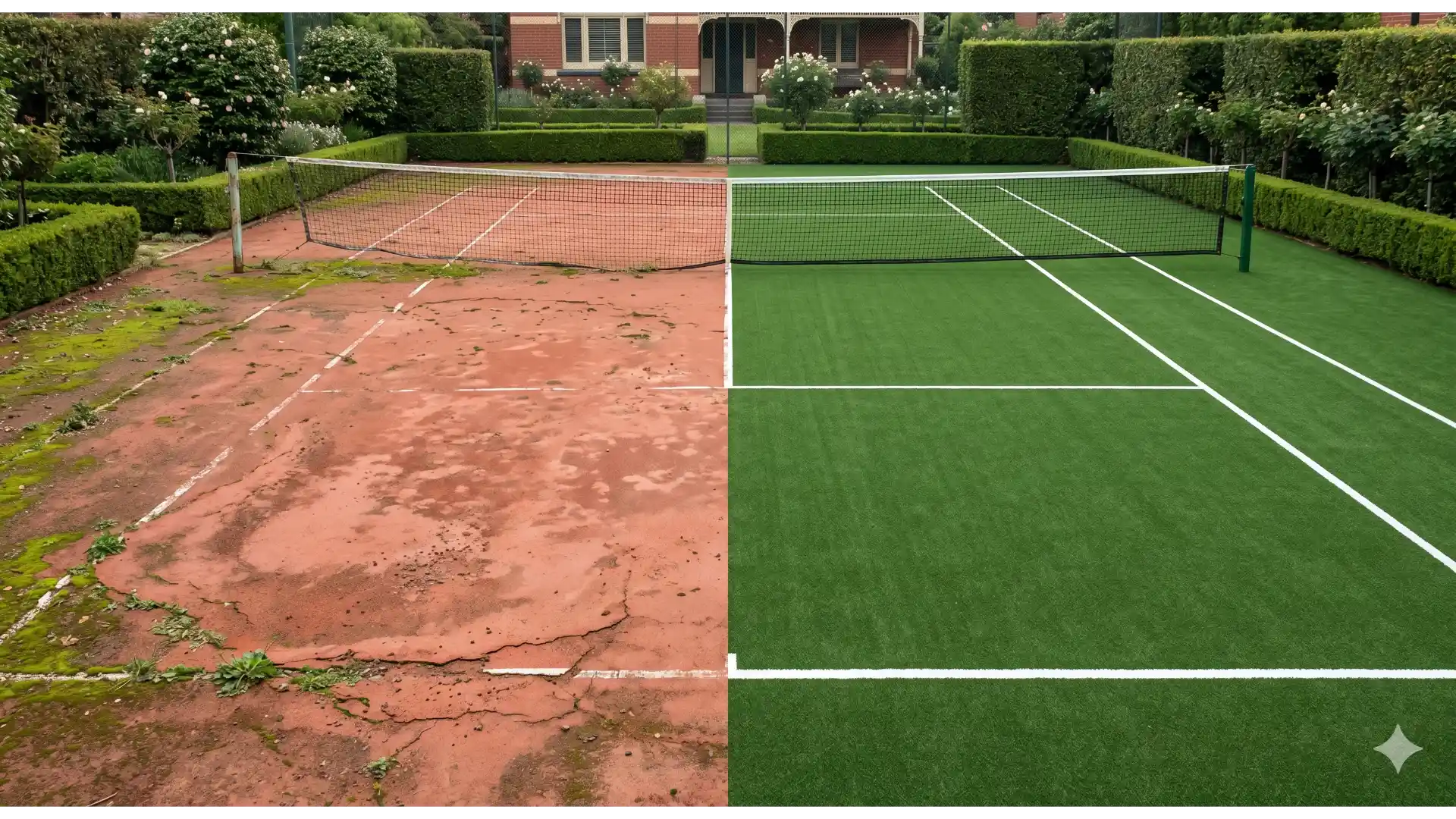
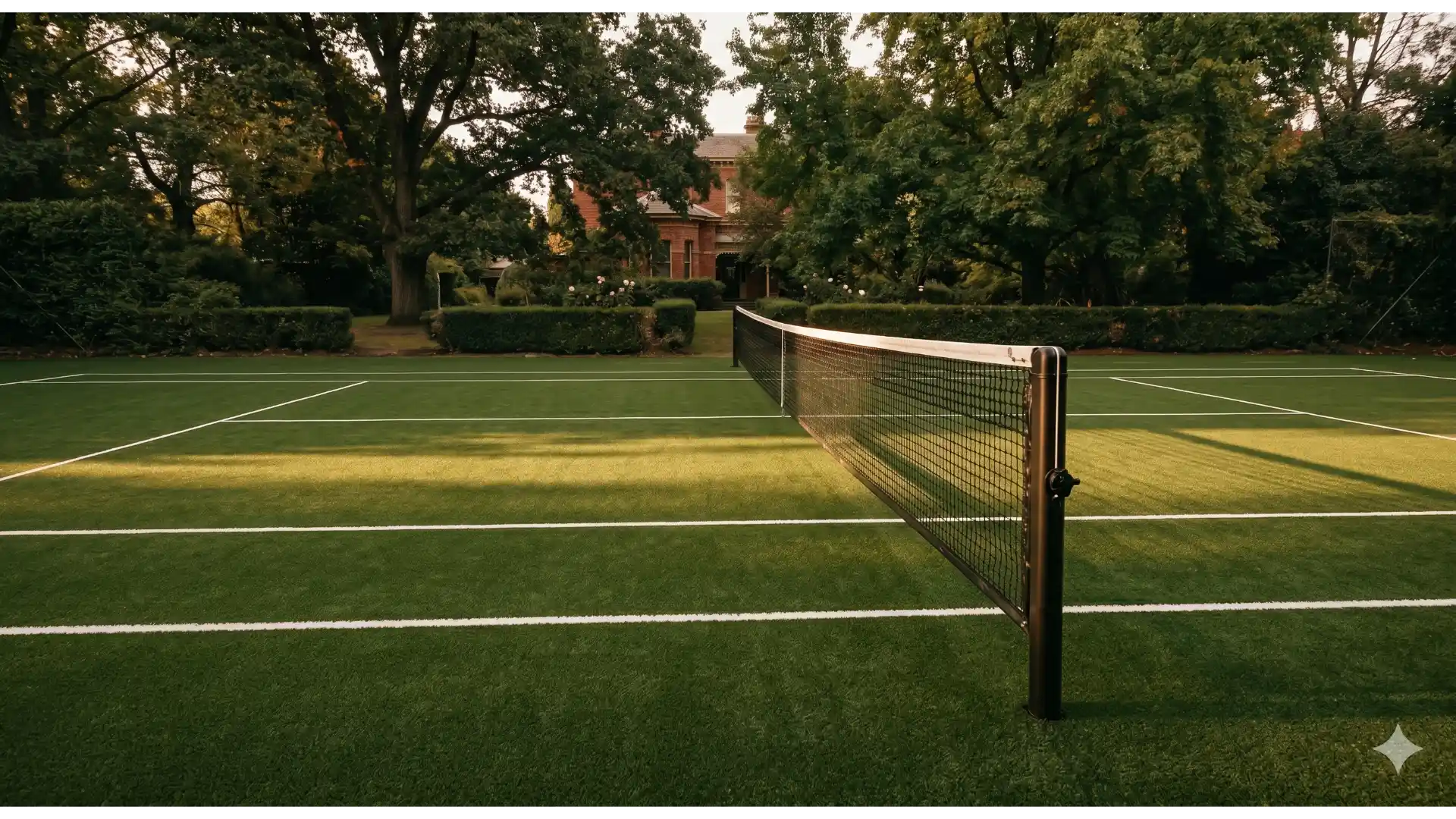
En Tout Cas is a red porous clay surface common in heritage Melbourne properties, particularly in Toorak, Hawthorn, Kew, and Malvern. Courts built in the 1960s to 1990s are often still on this surface. You have two main conversion options: acrylic hard court (Plexipave, Rebound Ace, or similar), which provides a low-maintenance, all-weather surface; or synthetic grass, which offers a softer feel and a more natural appearance within a period garden setting. We'll assess your base and advise which conversion suits your property, play style, and priorities during the site visit.
Do I need a building permit to resurface my tennis court in Victoria?
For like-for-like resurfacing of an existing court, a building permit is generally not required. However, if your property is subject to a Heritage Overlay (common across Stonnington and Boroondara councils), planning approval may be needed for fencing, lighting, or any changes to the court's physical footprint. We can advise on your specific property's requirements before any works commence. We recommend confirming heritage overlay status with your local council before the site visit so we can factor it into the scope conversation.
How long does tennis court resurfacing take?
For a standard residential acrylic re-coat with crack repair and line marking, works typically take 3 to 5 days on site, plus 5 to 7 days curing time before the court is playable. Full synthetic grass replacement generally takes 5 to 8 days on site. We confirm the exact timeline in your written proposal and build it around your schedule, including pre-sale campaign dates, renovation programmes, and event preparation.
What factors affect the cost of tennis court resurfacing?
Several variables determine the scope and cost of any resurfacing project, which is why we don't quote over the phone. The main factors are: the condition of the existing base (cracks, drainage issues, and subsidence all affect preparation work), the surface type chosen (acrylic re-coat, full synthetic grass replacement, or En Tout Cas conversion each carry different labour and materials requirements), court size, and whether additional works are needed (fencing repairs, lighting, or drainage correction). We assess all of these during the site visit and provide a line-item written proposal within 48 hours.
What does a maintenance contract include?
Our maintenance contracts cover the annual service schedule for your court, typically one or two visits per year depending on usage and surface type. Each visit includes pressure cleaning, sand grooming (for synthetic surfaces), moss and algae treatment, line marking inspection and touch-up, net and post check, and a written condition report. We also handle SWMS documentation and provide a current certificate of currency for institutional and estate clients. The contract is set annually. We contact you before each visit.
Do you work with real estate agents on pre-sale court preparation?
Yes. We work with prestige real estate agents across Toorak, Hawthorn, South Yarra, and Kew on pre-sale court presentation. Most residential resurfacing and repair jobs are complete and cured within 8 working days from start. We work directly with the listing agent to coordinate timing, provide written documentation for vendor disclosure, and ensure the court is ready for photography and open inspections. Agents are welcome to call 03 9961 6078 to discuss a specific campaign timeline.